
Solana Validator Economics Abused by Universities and DATs Running “Malicious” Mod
University validators deliberately slow the chain in exchange for reduced operating costs
- Published:
- Edited:
A group of Solana validators has been flagged for allegedly running a “malicious” vote packing mod to boost revenues at the expense of network health.
Many of the validators in question are operated in the name of leading universities, while the vast majority are also subsidized by the Solana Foundation Delegation Program.
Can Solana’s upcoming Alpenglow update ease the economic squeeze that’s pushing smaller validators to harmful activity?
Validators Caught Operating Harmful Mod
On February 16, Valid Blocks co-founder Adi Bungărzan shared a message in the Solana Tech Discord server, drawing attention to a group of validators who were allegedly running a vote-packing mod.

By batching 2 slot votes into one transaction, validators were effectively able to pay half their vote costs. While this lowers each validator’s operational costs, network participants widely agree that vote-packing practices slow the chain and are harmful to the health and integrity of the network.

According to Adi Bungărzan, the deliberate vote-packing practice began as early as Epoch 877 (November 2025). Acknowledging that the earliest instances may have been accidental or temporary, Bungărzan remarked that the adoption of the mod grew quietly for several weeks, and became prevalent among University-operated validators in Epoch 915 in late January.
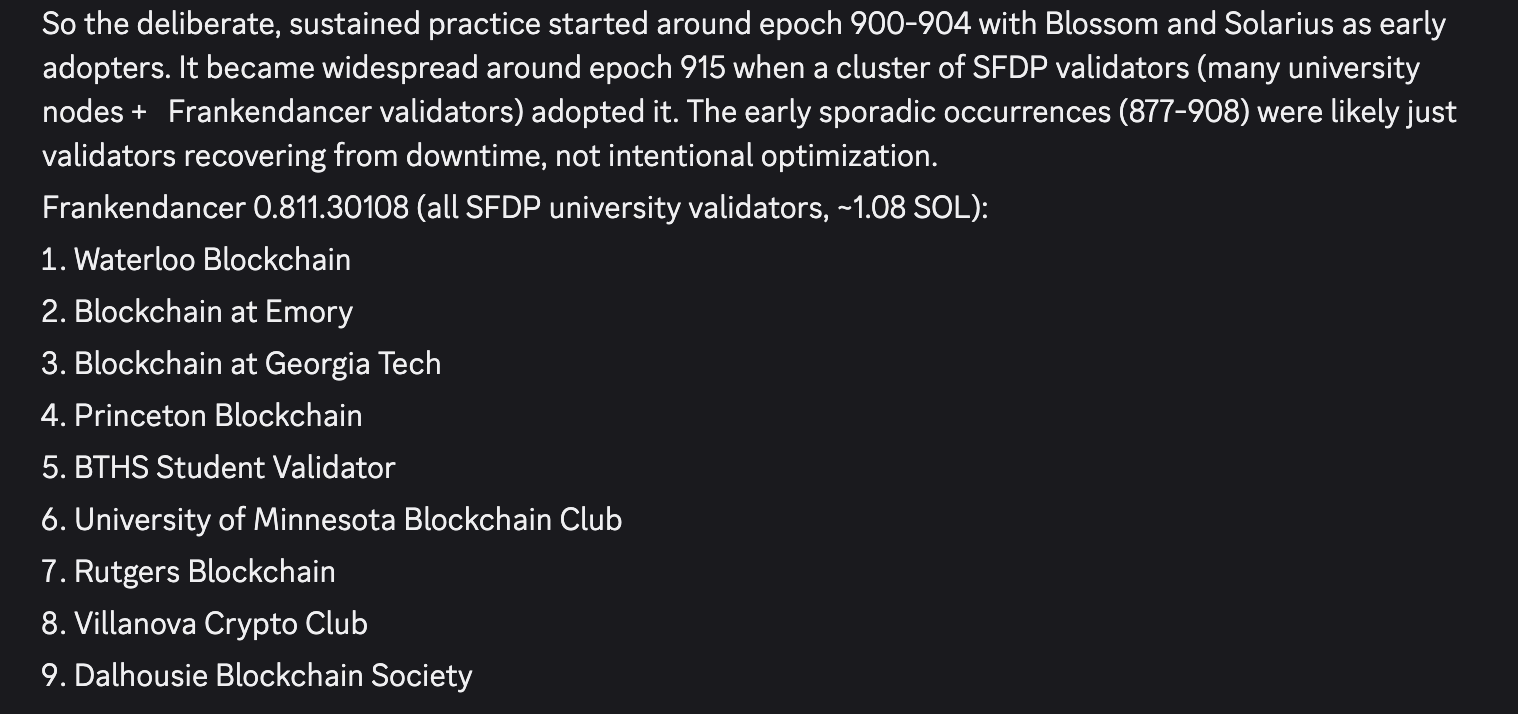
The simultaneous operation of the mod by a litany of supposed Universities has many contributors speculating that all these validators are being run by a single operator.

Additionally, 22 of the 24 operators flagged for running the vote-packing are also receiving a subsidy from the Solana Foundation Delegation Program, an initiative designed to help support emerging validators.
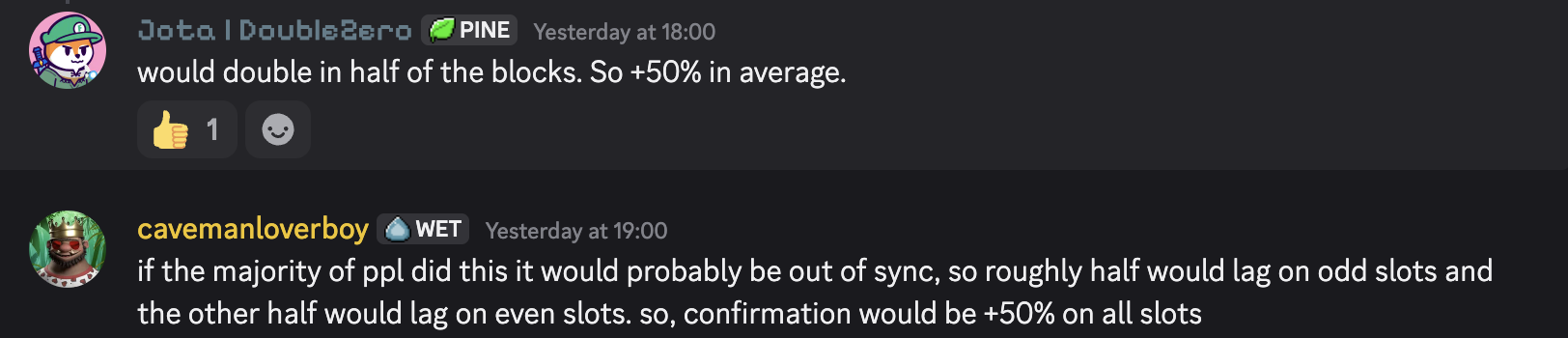
The cumulative amount of network stake running the mod is, at this stage, insufficient to have a material effect on Solana’s health. However, operators argue that en masse vote-packing would diminish performance, slowing confirmation by over 50% overall.
DeFi Development Corporation in the Spotlight
While many of the operators flagged for running the vote packing mod are sybils and low-stake SFDP recipients, the inclusion of a DAT among the perpetrators has certainly raised eyebrows among the validator community.
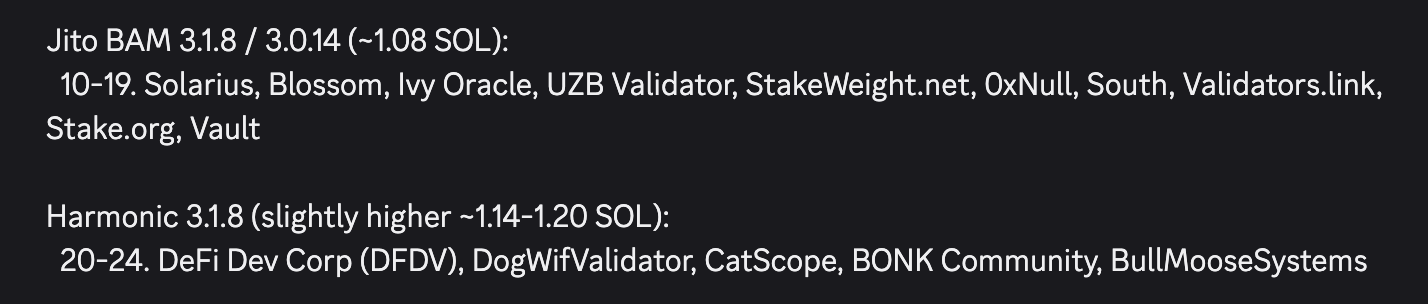
DeFi Development Corporation, a Solana DAT boasting a treasury of over 2.2M $SOL (valued at over $185.6M), has also been named as one of the validators in question. DFDV CIO/COO Parker White has denied the allegations, asserting their validator does not vote skip. White also highlighted that DFDV had no reason to try and reduce voting costs, which are negligible for a treasury of this size.
This is not the first time that DeFi Development Corporation has come under scrutiny for what network participants might call ‘questionable’ behavior. In late January, the DAT came under fire when onchain sleuths accused the firm of insider trading on its memecoin, $DONT.
Defi Development Corporation promptly identified the sniper, then confiscated the wallet’s remaining $DONT tokens and used realized profits from the trader’s sales to buy back and burn 5.1% of the memecoin’s supply.
Will Alpenglow Save Smaller Validators?
The vote-packing scandal comes during an extremely trying time for Solana validators. Between the inherently high operating costs and the unwinding of SFDP subsidies, small validators are finding it harder than ever to stay operational.
Network participants are hopeful that Alpenglow, a network update that promises to shift consensus voting offchain and lower operating costs, could provide a timely solution.
Speaking with SolanaFloor at Breakpoint 2025, Solana Foundation Executive Director Dan Albert posited that, under Alpenglow, votes are processed through a separate consensus.
To participate, validators will pay a configurable Vote Admission Ticket (VAT), instead of a flat fee per transaction. While still unconfirmed, Albert asserted that VATs are set to initially be priced at ~1.6 $SOL per epoch.
Read More on SolanaFloor
Geopolitical tensions spark fear across multiple asset classes
Global Markets Slump as Tensions Flare Between the U.S. and Iran
What’s Next for DATs?