The latest AI-themed token cycle on Solana has entered a volatile and revealing phase. What began as an experiment in blending open source AI development with memecoin funding has quickly produced sharp reversals, public disclaimers, and growing unease among both developers and traders. Several tokens tied to the so-called AI agent orchestration meta have collapsed within days of their peaks, raising questions about incentives, communication, and the limits of narrative-driven markets.
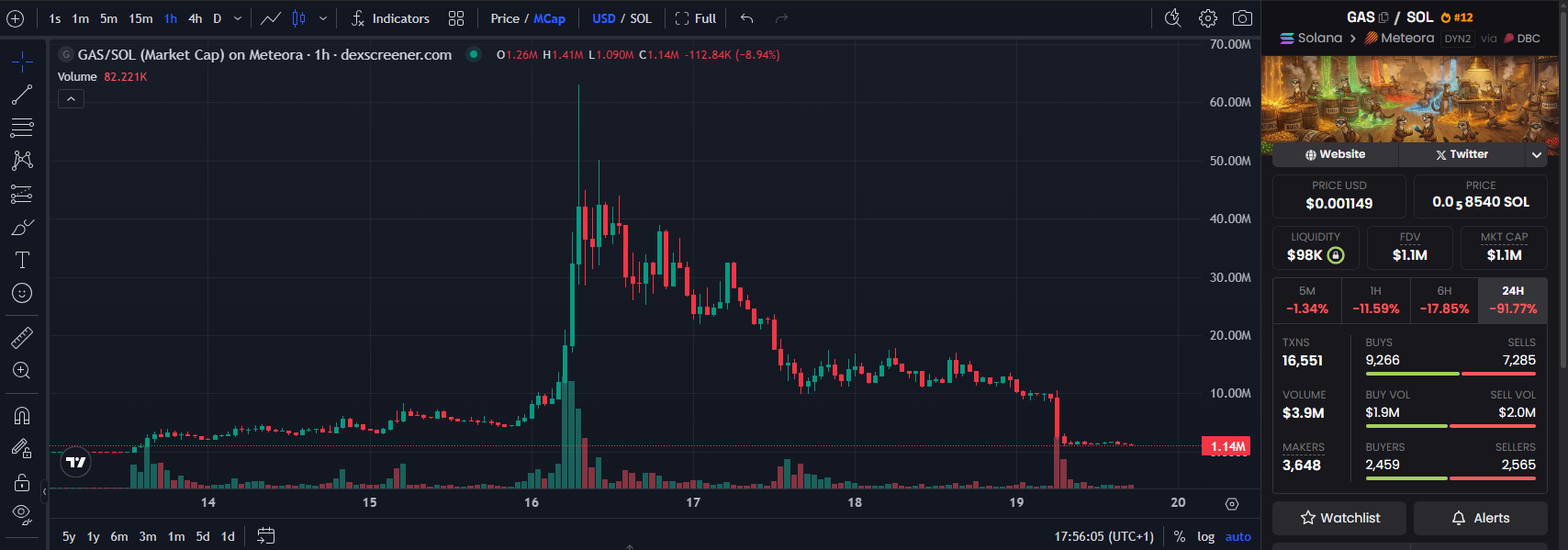
At the center of this turbulence sits $GAS, a token associated with Gas Town, an open source multi-agent orchestration framework created by veteran software engineer Steve Yegge. After briefly reaching a market capitalization of over $60 million, $GAS fell more than 97% in three days. Similar declines followed across other BagsApp launched tokens such as $RALPH, $VVM, $CMEM, and $COW.
This episode does not amount to a single rug pull or coordinated failure. Instead, it exposes deeper structural tensions between crypto’s attention economy and the norms of open source software development.
The Second Wave of the AI Meta Echoed the First
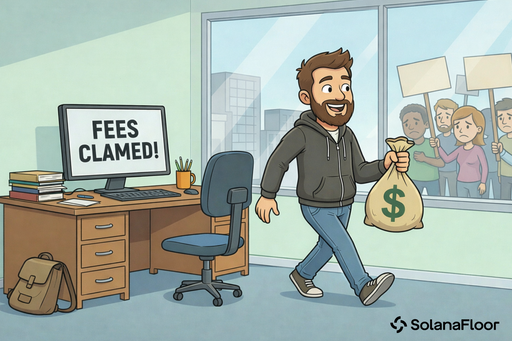
Recently, a new AI token narrative centered on agent orchestration frameworks like Steve Yegge’s Gas Town emerged. An independently launched $GAS token gained rapid traction through a now-familiar pattern, where deployers scan open-source projects or developer GitHub repositories, launch a token around that work, and then approach the associated developer to claim royalties and formally associate with the project. In several cases, including $GAS, developers went on to publicly acknowledge or post in support of the token after claiming fees, which significantly accelerated market attention and speculation.
Within days, $GAS reached a peak market capitalization of over $60 million, and Yegge accrued over $300,000 in fees. Yet the same mechanism that fueled the rise also amplified the fall.
On January 17, Yegge posted that he would spend less time on Crypto Twitter in order to focus on building Gas Town. In a market already conditioned by scams and abrupt developer disappearances, many traders interpreted the message as a signal of withdrawal. The token dropped more than 50% within 24 hours.
Two days later, Yegge published a longer blog post that included a formal disclosure clarifying his relationship with $GAS. He stated that he did not create the token, did not control its price, supply, or liquidity, and that $GAS did not represent equity or ownership in Gas Town or his work.
Following the disclosure, $GAS sold off sharply again. The market capitalization fell to around $1.2 million, marking a decline of roughly 97% from its peak in just three days.
Software Development Ethics Vs. Memecoin Expectations
In a previous blogpost from January 15, Yegge had praised BagsApp, calling it “an innovation engine, similar in some ways to the stock market, where people are trying to predict and foster corporate winners. BAGS is a trading market targeted at predicting and fostering creators: individuals or maybe small teams who are out there creating amazing things,” so his disclosure seemed like a deviation from the spirit of his earlier words. By comparing BagsApp to the stock market, Mr. Yegge led market participants to believe that they had equity in his work.
From a trader’s perspective, the clarification undercut the implicit narrative that had driven speculative demand.
In the case of $GAS, the narrative centered on Gas Town as a potential future standard for AI agent orchestration and on Yegge’s reputation as a veteran engineer. When Yegge explicitly stated in the blog post that $GAS conveyed no ownership or control, some traders concluded that the upside case had weakened.
A pattern has surfaced in which developers welcome speculative inflows at first, only to later distance themselves once sentiment turns. A token created around RedwoodJS, an open-source framework, followed a similar trajectory, climbing to roughly a $2.5 million market capitalization after public acknowledgment from the RedwoodJS team, which reportedly claimed more than $100,000 in fees and tweeted: “We appreciate the support from the community, to the m$$n!” The token later collapsed by approximately 96% after the team issued a definitive statement that it did not endorse crypto and would never create a coin.
Was BagsApp Part of the Problem?
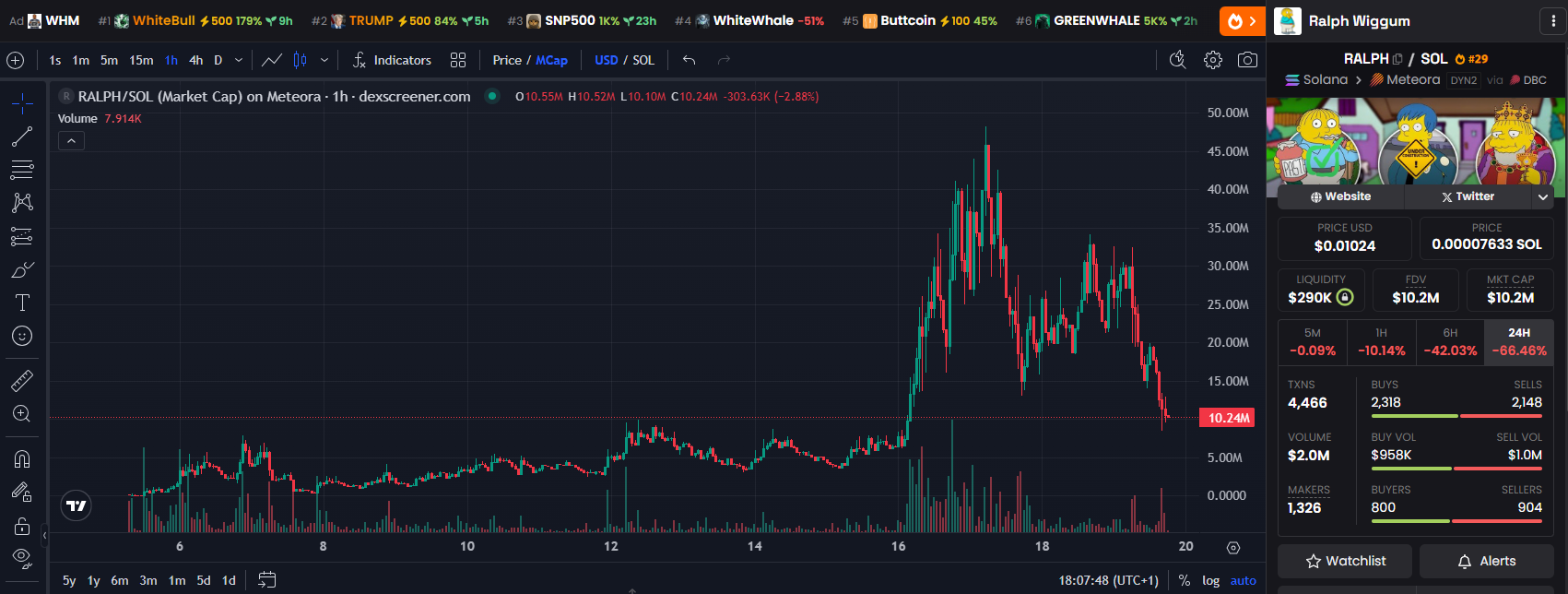
Similar patterns emerged across other AI-related tokens on the platform. $RALPH, tied to Geoffrey Huntley’s Ralph Wiggum loop orchestration pattern, initially performed well but later retraced sharply.
$VVM and $CMEM followed comparable trajectories. X user @kkashi_yt highlighted a trader who lost approximately $105,000 on $COW, underscoring how quickly gains can reverse.
Critics of the BagsApp ecosystem seized on these outcomes as evidence of systemic issues. One community member summarized the sentiment bluntly, claiming that the entire ecosystem had become a series of quick pump-and-dumps with little real development underneath.
What the Collapse Reveals
The rapid decline of $GAS and related tokens highlights several lessons. First, narrative-driven markets can move faster than developer intent. Second, transparency, while necessary, can disrupt speculative assumptions. Most importantly, the episode highlights a structural gap.
In the wake of the negative price action, prominent Solana influencer and trader Ansem received backlash for publicly promoting $GAS and other coins tied to the meta. In one tweet, he replied to Mr. Yegge, saying “just code brotha we'll bullpost for you.”
Responding to the backlash, Ansem gave his opinion on why he thinks the AI meta didn’t succeed, tweeting that it seemed “it will be tough to support tokens without some structure.” He referenced MetaDAO’s “ownership coins” as an example.
Funding development through creator-linked tokens can offer a powerful way to support open source work early, but without a formal mechanism that grants token holders clear economic rights or equity-like exposure if a project succeeds, the model repeatedly breaks down. In the absence of protections or enforceable alignment, developers retain full autonomy while holders absorb downside risk, making sharp collapses almost inevitable once narratives weaken.
The AI vibe coding meta may continue in some form. New tokens may launch, and new narratives may form. Yet the recent collapses have reset expectations. Developers increasingly signal that they do not endorse or control the memecoins trading around their work. Traders who participate must price that reality in from the start.
Read More on SolanaFloor
The Second Coming of the AI Meta: “This Time Is Different?”
Here Is Everything You Need to Know About the $SKR Airdrop
RWAs Are Heating Up on Solana!