“The Only Way Out is Through” - MetaDAO Extends Controversial P2P.me ICO
Decision markets once again lead traders and investors into uncharted territory
- Published:
- Edited:
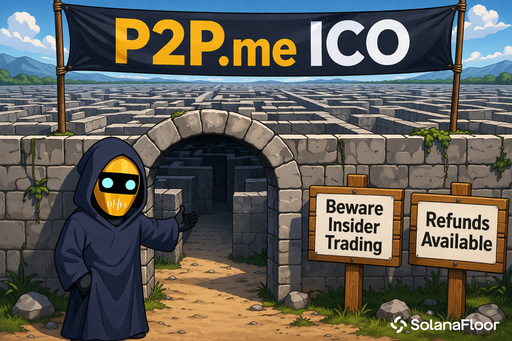
P2P.me, a fiat-crypto tamping solution backed by Multicoin Capital and Coinbase Ventures, has found itself in the crosshairs of Solana’s latest futarchic governance debate.
After admitting to insider trading the outcome of its ICO raise on Polymarket, P2P.me has been given the chance to prove its critics wrong.
The P2P.me debacle marks the second time this quarter that decision markets have captivated the attention of Solana’s onchain economy. Can P2P.me push through the accusations and retain investor capital?
MetaDAO Enables Refunds in Continued Sale
On March 27, the MetaDAO-hosted P2P.me ICO came under fierce scrutiny from participants when a wallet tagged as the P2P Team Wallet was discovered trading the raise outcome on Polymarket. After initially deflecting questions about the wallet’s activity and calling the concerned parties “retards”, the P2P team acknowledged that the wallet was, in fact, theirs.
Despite the controversy surrounding the ICO, MetaDAO has extended the sale, giving investors the opportunity to claim refunds on committed capital.
While arguing that he doesn’t support teams participating in prediction markets directly related to their ICOs, MetaDAO co-founder Proph3t argues that “it is unclear that this is grounds for cancelling the raise”.
Asserting that the P2P wallet’s trading seems like a “guerilla marketing stunt gone too far”, Proph3t acknowledged that the team’s biggest backers, who represent reputable firms like Multicoin and Alliance, remain committed to the sale.
MultiCoin General Partner Shayon Sengupta affirmed that demonstrated “accountability”, other investors opted to give the P2P team the benefit of the doubt, arguing that “poor judgement on $20k doesn’t override the thesis”.
Insider Trading or Backing Yourself?
As often arises in matters of governance, network participants are divided on the ethics of the debacle. While P2P.me has faced a swathe of criticism from across the ecosystem, sympathizers contend that the team is simply ‘backing [their] word with [their] own money’.
OwnershipFM podcast host 8bitpenis asserts that “insider trading isn’t morally wrong”, while wassieloyer, a member of Jupiter’s legal team, remarked that is one of the core tenets of the futarchy thesis. Other legal professionals have suggested that, by continuing the raise, MetaDAO is “exercising control” and may have created a bad precedent.
One contributor claims that MetaDAO has stepped away from being a “fundraising platform”, and may have “created a due diligence obligation on themselves”. Wassieloyer later corroborated this statement, reasserting that MetaDAO finding itself becoming more involved in raises as the platform, and projects launching there, attract greater mindshare.
More generally, the ecosystem has decried P2P.me’s trading activity. Commentators noted that the team’s ‘bet on itself’ was in direct violation of Polymarket’s insider trading policies, expressing disappointment in MetaDAO’s decision not to cancel the entire ICO.
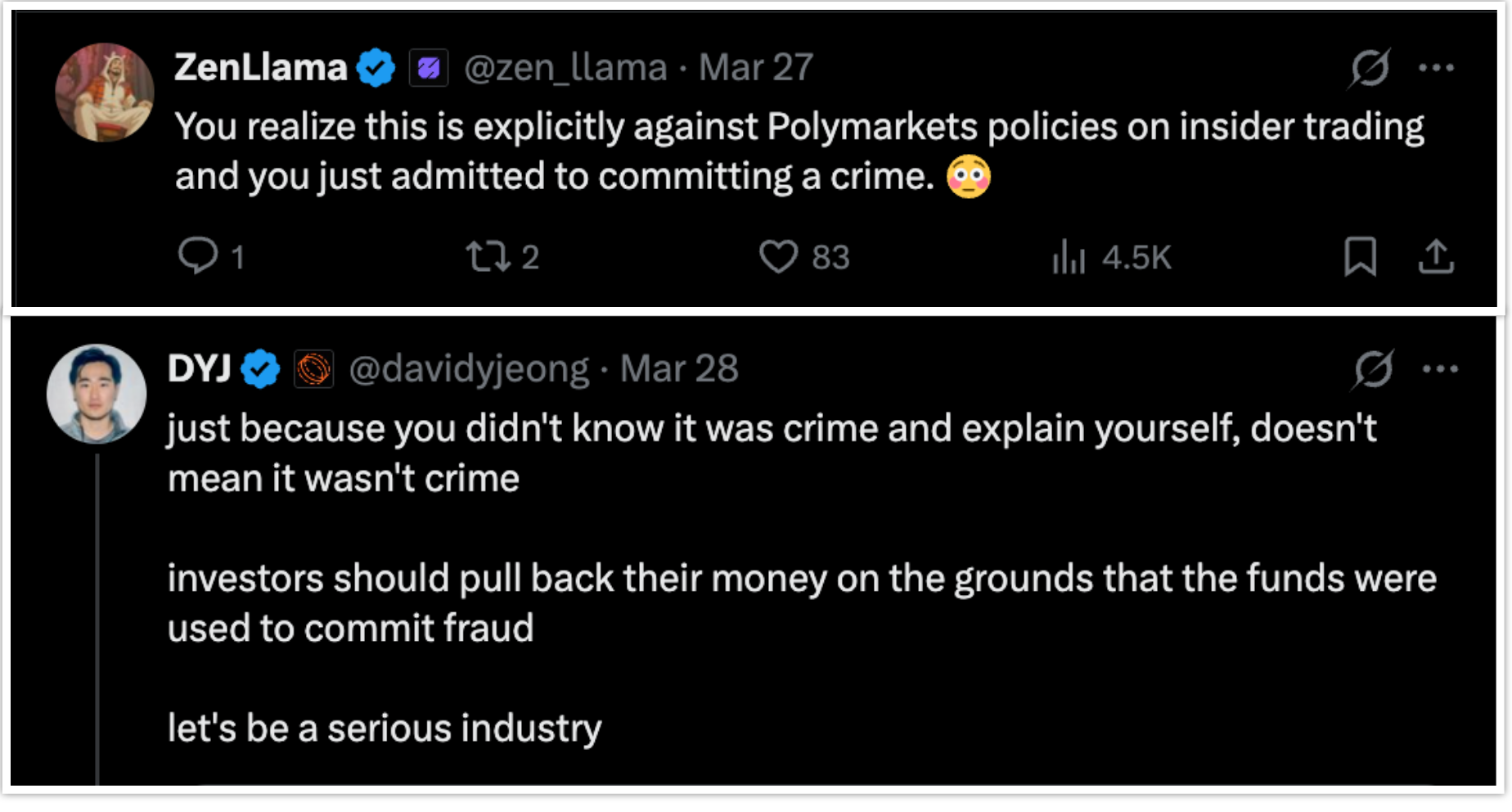
Despite the controversy, the P2P.me scandal highlights one of the futarchy model’s most compelling principles. If token holders are ultimately dissatisfied with the team’s performance, protective measures are still hard-coded into the design.
Investors can still float proposals to liquidate the P2P.me treasury and return funds to holders, as witnessed a few weeks earlier in the Ranger Finance liquidation.
Ownership Coins in Spotlight Once Again
Early this year, Ranger Finance had its treasury returned to token holders via a MetaDAO decision market. After originally raising $8M in its ICO, Ranger Finance was forced to liquidate its treasury after allegedly misrepresenting its revenue to attract investment interest.
Futarchy-advocates lauded the liquidation as a powerful proof-of-concept, giving token holders a layer of protection against teams who do not meet holder expectations. The Ranger Finance liquidation serves as a timely reminder that P2P.me could face the same fate, if the team fails to deliver on its promises.
MetaDAO, ownership coins, and decision markets are consistently finding themselves central to ongoing discussions around token holder rights in the crypto industry. The model may be going through some growing pains, but futarchic governance is undoubtedly changing the landscape around what it means to be a tokenholder in 2026.
Read More on SolanaFloor
Is MCP the perfect solution everyone is promising?
Solana Community Divided Over Anza MCP Proposal’s Impact on Validators and Perps Trading
Did the Banks Just Win?