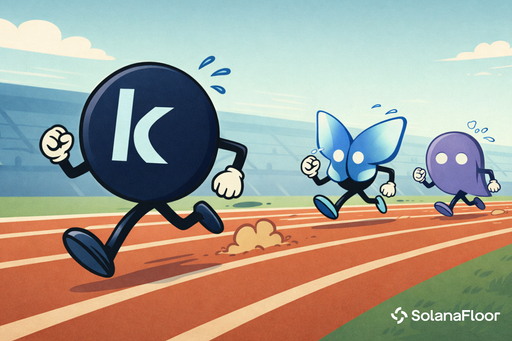
Kamino, a Solana-based DeFi protocol, has emerged as the leading platform across all blockchain networks in real-world asset (RWA) lending by total deposits. The protocol now surpasses established DeFi giants such as Aave and Morpho, reflecting a broader shift in how capital flows into tokenized real-world assets.
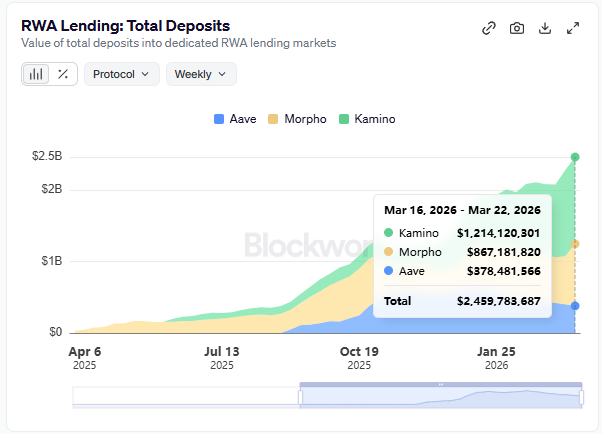
Blockworks data shows that total deposits in RWA lending markets have climbed to approximately $2.45 billion. Within that total, Kamino accounts for the largest share, reaching about $1.21 billion in deposits last week. In comparison, Morpho holds roughly $867 million, while Aave trails with about $378 million.
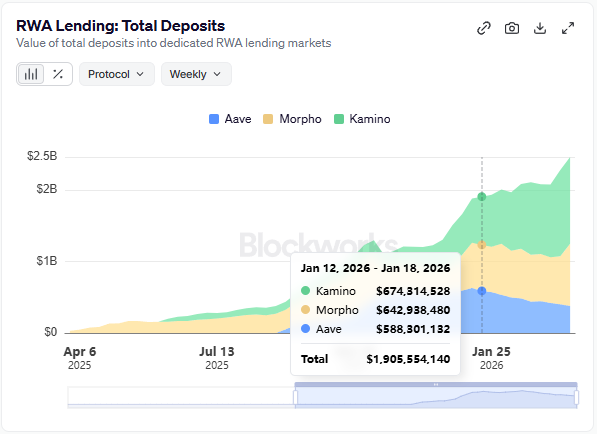
This positioning places Kamino at the center of a rapidly expanding segment of DeFi that connects blockchain infrastructure with traditional financial assets. By mid-January 2026, Kamino recorded approximately $674 million in deposits, already ahead of Morpho and Aave for the first time, with $642 million and $588 million, respectively. The continued rise to over $1.2 billion by March highlights both consistent inflows and sustained user activity.
At the same time, total borrowing against RWA collateral has reached approximately $1 billion. This indicates that lending activity has grown in parallel with deposits, rather than remaining idle liquidity.

Kamino Advances the RWA Frontier Through Collateral Diversity
Kamino Finance is expanding its institutional offering by enabling the use of offchain collateral through Anchorage Digital, beginning with a pilot program alongside Solana Company, a publicly listed entity. This initiative reflects a shift toward a hybrid financial infrastructure that connects regulated custody with onchain lending.
Speaking at Solana Accelerate APAC in Hong Kong, Cheryl Chen, Head of Strategy at Kamino, outlined the structure. In this model, the borrower deposits assets with Anchorage Digital, a federally regulated qualified custodian.
Kamino integrates with Chainlink to access real-time data on collateral held within Anchorage’s system. Based on this data, the protocol mints a mirrored onchain representation of the collateral, which the borrower can then use within Kamino’s lending markets to borrow stablecoins and access onchain yield.
This design allows institutions to maintain custody of assets while still participating in decentralized finance. Borrowers can increase capital efficiency without moving funds out of regulated environments, which addresses a longstanding barrier to institutional adoption.
Kamino was also one of the first DeFi protocols to accept tokenized stocks as collateral. In July 2025, the protocol integrated tokenized stocks, enabling users to borrow stablecoins against equity-like instruments.
This development aligns with broader trends in financial markets. On March 18, 2026, the U.S. Securities and Exchange Commission approved a rule change allowing Nasdaq to support the trading of tokenized shares through a pilot program operated by the Depository Trust Company, part of the DTCC. Eligible participants can opt to settle trades in tokenized form, with these assets sharing the same order book and execution priority as traditional equities while maintaining identical shareholder rights.
This regulatory step signals increasing convergence between traditional finance and blockchain infrastructure. While regulators continue to emphasize that tokenized securities remain subject to existing securities laws, the pilot introduces a pathway for blockchain-based settlement within established market structures. These efforts aim to improve settlement efficiency and expand accessibility while preserving the core mechanics of traditional financial systems.
By supporting tokenized equities, Kamino positions itself within this evolving landscape. The protocol effectively bridges DeFi lending with tokenized versions of traditional financial instruments, increasing the diversity of collateral available onchain.
RWA Activity on Solana
The rise of Kamino also reflects growing activity in the Solana ecosystem. Solana has become a key hub for RWA experimentation due to its rich onchain culture and strong user base.
RWA.xyz data shows that Solana hosts approximately $1.69 billion in RWA value. The network supports over 1,800 RWA-related assets and has now outpaced Ethereum in holders, with 175,000 RWA holders to Ethereum’s almost 162,000.
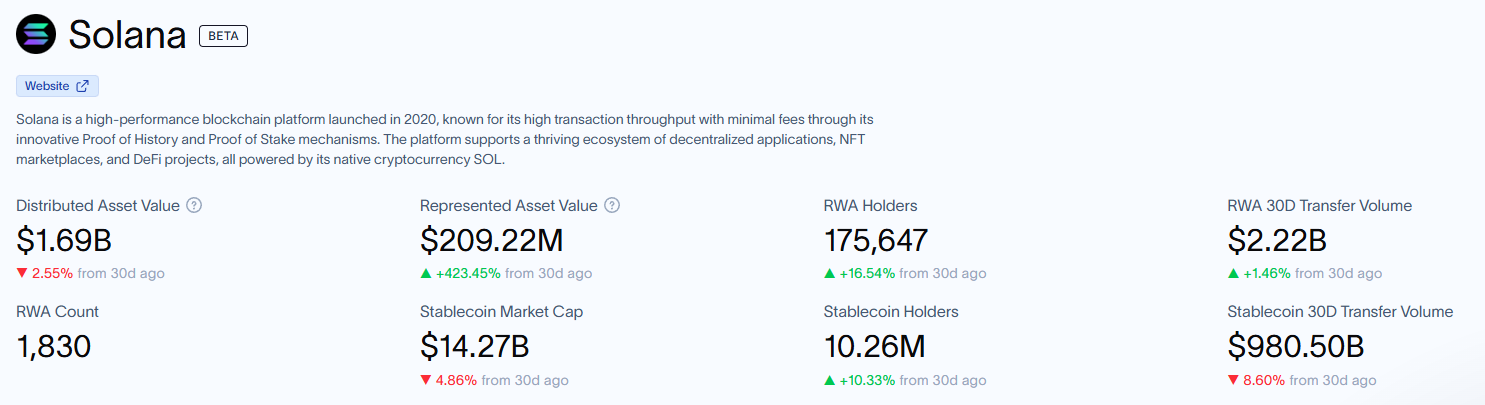
The network recorded about $2.22 billion in RWA-related transfer volume over the past 30 days.
Solana has also consistently dominated tokenized equities spot trading volume, recording $128 million in weekly volume last week compared to $2 million across all other chains, representing a 6,300% difference.
These figures indicate active usage rather than passive holdings, reinforcing Solana’s position as a leading environment for tokenized assets.
Structural Drivers Behind RWA Growth
Several factors contribute to the rapid expansion of RWA lending. Tokenization allows traditionally illiquid assets to become accessible within decentralized markets. Borrowers can unlock liquidity without selling underlying assets, while lenders gain exposure to yield backed by real-world value.
Protocols like Kamino address these challenges by focusing on collateral management, liquidity access, and integration with custodians. Their role increasingly resembles that of infrastructure providers rather than simple lending platforms.
Kamino’s rise to the top of RWA lending markets and its rapid growth within the Solana ecosystem reflect a broader transformation within DeFi. Apart from emerging as the leading platform in RWA lending across all chains, the protocol has also climbed to become the second-largest protocol on Solana by TVL. By surpassing legacy platforms such as Aave and Morpho in this specific category, Kamino illustrates how newer infrastructure can outcompete established players in targeted verticals where capital efficiency matters most.
Read More on SolanaFloor
Solana Community Divided Over Anza MCP Proposal’s Impact on Validators and Perps Trading
Coinbase Withholds Support for CLARITY Act Amid Stablecoin Yield Dispute
What Does the CLARITY Act Passing Actually Mean For Crypto?