GMTrade Leads Solana Perps With $554m in 24H Volume Amid Chain's Struggle for Dominance
A fast-rising derivatives platform highlights both progress and pressure within Solana’s trading ecosystem.
- Published:
- Edited:
GMTrade, a Solana-based perpetual futures venue focused on RWA trading, has emerged as the top perp DEX on the network by 24 hour trading volume.
The platform currently supports 86 trading pairs and has recorded a steady increase in open interest, signaling growing trader engagement and deeper liquidity.
DefiLlama data shows GMTrade recording $554.27 million in 24 hour volume, surpassing other Solana-native derivatives platforms such as Pacifica, Jupiter, Drift, and FlashTrade. Open interest on GMTrade has climbed to approximately $49.13 million. Over the last 30 days, the platform has processed $4.489 billion in volume, reinforcing its rapid ascent since the beginning of 2026.
Growth Trajectory Since January 2026
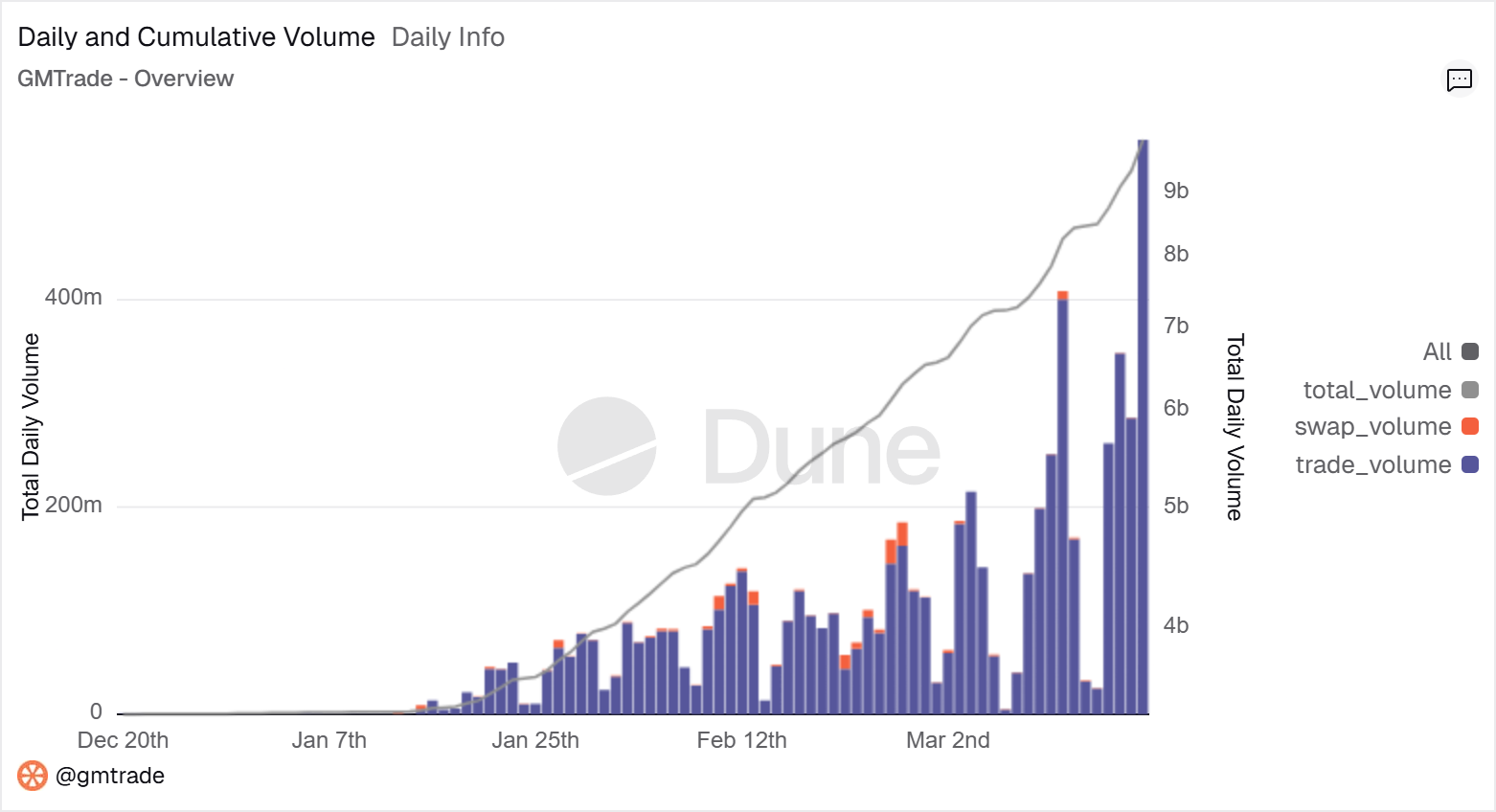
GMTrade’s rise has not occurred overnight. Dune data indicates that the platform has experienced steady and consistent growth in trading activity since January 2026.
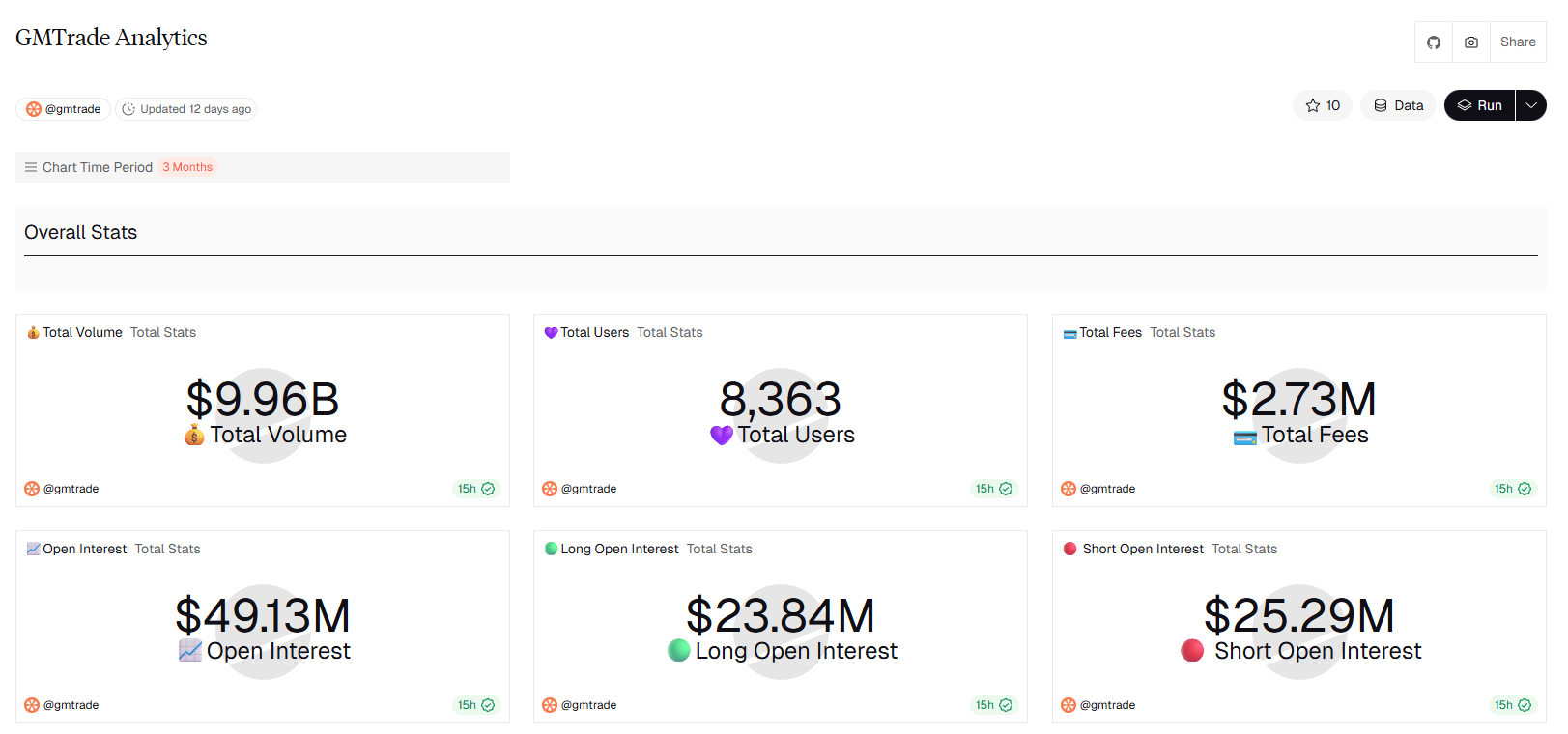
Daily volume has trended upward, with notable spikes in March as activity accelerated. Cumulative trading volume has reached approximately $9.96 billion, while total fees generated stand at $2.73 million. The platform has attracted over 8,363 users, with new user growth peaking in late January before stabilizing at a lower but consistent rate.
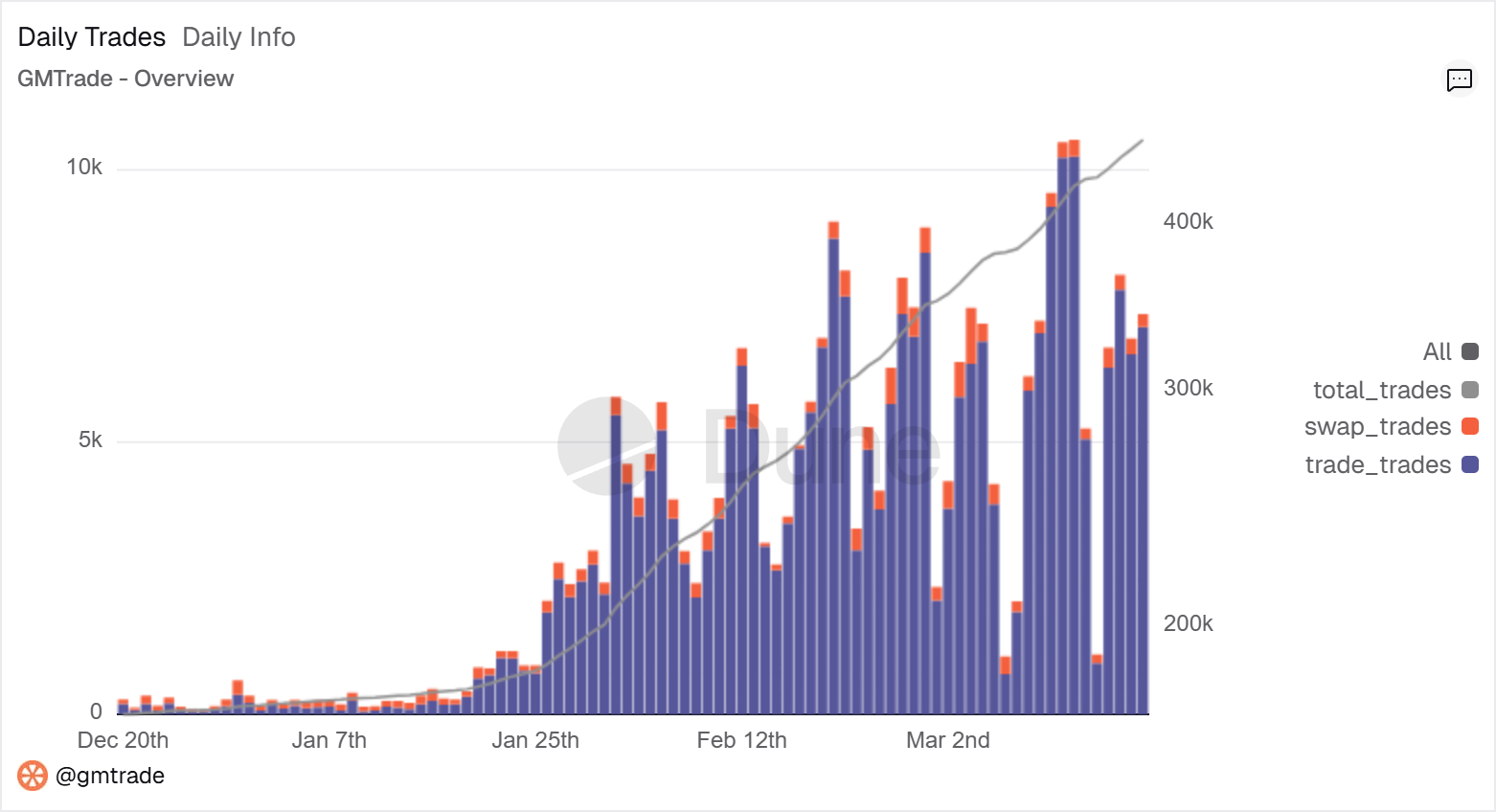
Daily trade counts have also increased significantly, reflecting both higher participation and more frequent trading behavior among existing users. At the same time, open interest has expanded alongside volume, suggesting that traders are maintaining positions rather than engaging solely in short term speculative activity.
The balance between long and short open interest indicates a relatively neutral market structure, with no clear directional dominance. This equilibrium can often signal healthy market conditions, where both bullish and bearish participants actively engage.
Part of GMTrade’s growth may link to expectations surrounding potential token incentives with the platform having launched a points program in March 2025.
In the broader crypto market, perpetual futures platforms have historically distributed substantial value through token airdrops. Hyperliquid’s initial distribution, now valued at over $12 billion, and Aster’s $1.6 billion token allocation have set strong precedents.
Competitive Pressure from Specialized Chains
GMTrade’s rise occurs within a broader context of increasing competition from purpose built derivatives platforms. Hyperliquid, a layer 1 blockchain optimized specifically for perpetual futures trading, has captured significant market share in recent months.
Hyperliquid operates with trading logic embedded directly at the protocol level, enabling high throughput and low latency execution. The platform reportedly supports up to 200,000 transactions per second with median latency around 200 milliseconds.
This performance, combined with features such as community funded market making and a large scale airdrop, has driven substantial adoption. Hyperliquid currently records approximately $7 billion in open interest, $4.2 billion in total value locked, and around $191 billion in 30 day trading volume. Weekly volume figures suggest that tens of billions of dollars in derivatives activity have shifted away from general purpose chains such as Solana.
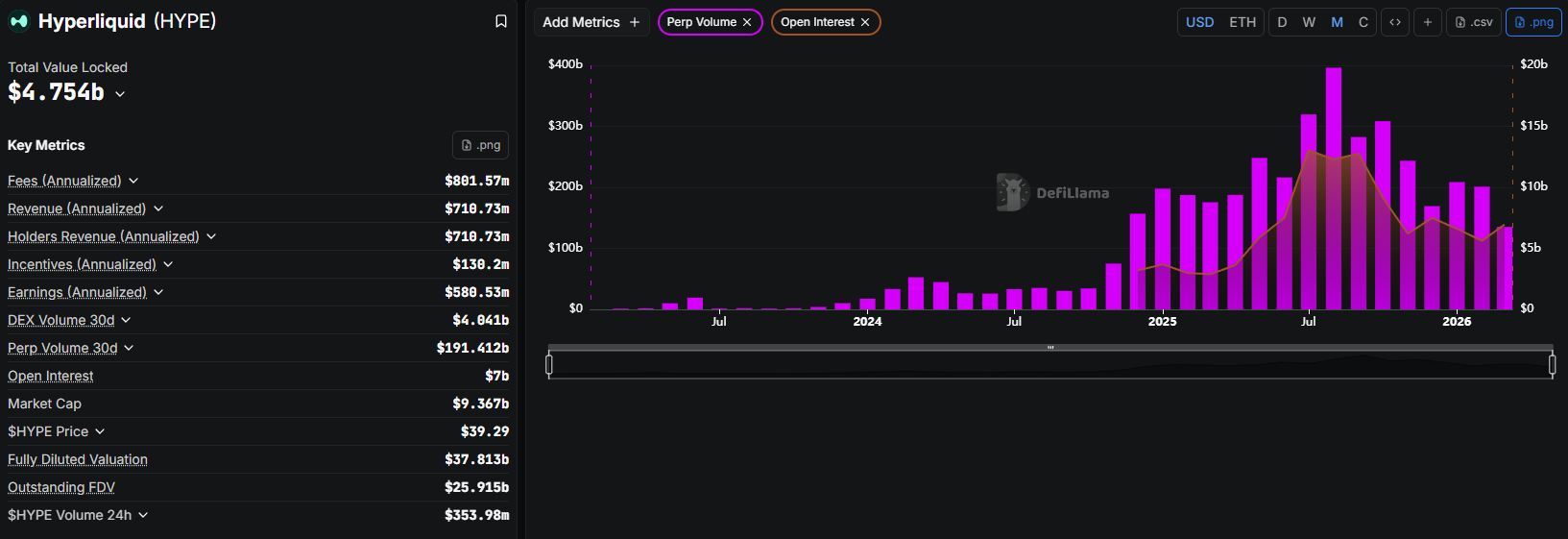
The success of Hyperliquid highlights a growing trend toward chain specialization, where networks focus on specific use cases rather than attempting to support all applications equally.
Solana Foundation’s Response and Ecosystem Strategy
The rise of GMTrade coincides with increased attention from the Solana Foundation toward derivatives infrastructure. The organization has taken steps to support trading activity, including hiring for roles focused on building trading APIs and improving data infrastructure for market participants.
A recent job posting for a trading engineer outlines plans to develop systems that provide real-time and historical market data across Solana venues, including perpetual futures platforms. These efforts aim to attract professional traders, market makers, and high-frequency trading firms to the network.

In February 2026, the Solana Foundation launched an institutional trading initiative designed to support hedge funds, proprietary trading firms, market makers, and crypto native trading teams operating on Solana. The program focuses on infrastructure, liquidity access, and execution reliability, and was positioned as a structured onramp rather than a promotional effort.
Around the same time, Solana co-founder Anatoly Yakovenko introduced an experimental project on devnet known as Percolator or SOV, which explores a novel form of perpetual futures where a memecoin serves as both the traded asset and the collateral backing the market. Yakovenko framed the system as an open-ended research effort focused on software design, risk containment, and onchain transparency rather than a production-ready product.
Criticism and Community Discourse
The Foundation’s strategy has drawn both support and criticism. A tweet from the tokens account managed by the Solana Foundation noted that Hyperliquid now trades more oil, gold, and silver than crypto. This observation underscores the growing importance of RWA markets in the derivatives sector.
In response, a user known as celon criticised the network’s execution, remarking that it was ironic that Solana had not achieved similar outcomes despite its early lead.
This exchange reflects a broader tension within the ecosystem. While Solana has long positioned itself as a high performance blockchain capable of supporting advanced financial applications, it has struggled to dominate the perpetual futures category.
Jerry Xiao, cofounder of Ellipsis Labs, earlier highlighted technical challenges associated with building fully onchain derivatives systems on Solana.
These include complexities related to order matching, margin management, and latency constraints within Solana’s programming model.
At the same time, some ecosystem participants such as MacBrennan Peet, founder of Project0, have argued that the Solana Foundation should support multiple competing platforms rather than concentrating resources on a single solution.
This perspective suggests that competition could drive innovation and improve overall product quality.
Read More on SolanaFloor
Pump.fun Surges to #1 in 24H DEX Volume as Buybacks Offset 30% Of $PUMP Circulating Supply
Solana Stablecoin Supply Hits All-Time High as Experts Predict Macroeconomic Crisis
Solana’s New Bullcase