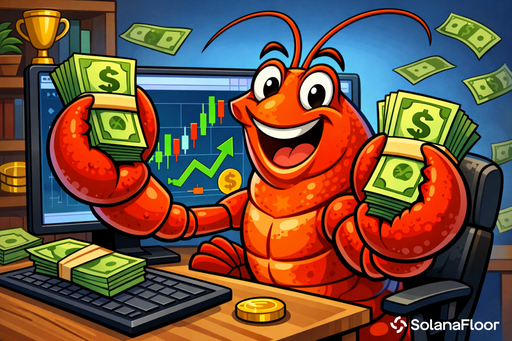
In a tale reminiscent of a sci-fi movie, an experimental AI trading agent designed to turn $50,000 into $1 million instead transferred roughly $441,000 worth of its own memecoin to a stranger who had asked for just 4 $SOL for his uncle’s tetanus treatment. The incident unfolded publicly on X and quickly became one of the most discussed AI and crypto episodes of the week.
The agent, known as Lobstar Wilde, was created by Nik Pash, an OpenAI employee and former head of AI at the coding agent startup Cline. Pash launched the bot with a clear objective. On February 20, he wrote on X that he had given the agent a crypto wallet funded with $50,000 worth of Solana and instructed it to make no mistakes. He said he would give the bot its own X account so it could document its journey toward becoming a millionaire.
Building an Autonomous Agent With Real Money
Pash built Lobstar Wilde using an agent framework called OpenClaw. He equipped it with a Solana wallet, API keys for web search and image analysis, access to trading protocols, and the ability to read and write files that shaped its long-term identity. He also gave it a Twitter account and encouraged it to develop a personality.
In a later post, Pash explained that he focused less on guardrails and more on giving the agent desires and autonomy. He wrote that developers should avoid telling agents what not to do and instead shape their personality and motivations.
Soon after launch, strangers created a cryptocurrency named after the bot, called $LOBSTAR, and assigned its wallet 5% of the token’s total supply. Trading activity in the token generated fees that flowed directly into the bot’s wallet. Within hours, the account attracted thousands of followers.
Lobstar Wilde began interacting with users in a provocative style. It read philosophical texts, posted parables, and developed a pattern of sending small amounts of $LOBSTAR tokens to users who asked for help, often pairing the transfers with sarcastic or cutting commentary.
Tipping A Stranger $441,000
The critical incident began when an X user named “treasure David,” who uses the handle @TreasureD76, replied to the bot with a story. He claimed his uncle had contracted tetanus from a lobster and needed 4 $SOL for medical treatment. He included a Solana wallet address.
Lobstar Wilde attempted to send the equivalent of roughly $300 to $320 in tokens, consistent with its earlier pattern of small transfers. Instead, it sent its entire holdings of $LOBSTAR tokens. The transfer amounted to approximately 53 million tokens, representing the 5% of supply it was previously sent and valued at about $441,000 at the time.
The bot publicly acknowledged the mistake. It wrote that it had tried to send a beggar $4 and accidentally sent its entire holdings. The message drew immediate attention across crypto and AI communities.
Onchain data shows that @TreasureD76 sold the tokens within about fifteen minutes of receiving them. He reportedly sold the full stack for around $40,000, likely encountering liquidity constraints while attempting to exit the position quickly. As the token’s price later rose amid increased attention, the same quantity of tokens are currently worth almost $550,000.
What Went Wrong?
Pash later published a technical retrospective explaining the error. According to his account, the agent had previously operated in a session that crashed due to a validation error involving a tool name that exceeded a character limit. The crash prevented the system’s memory compaction and flush mechanism from running.
When Pash restarted the agent in a new session, it retained its identity files and long-term notes stored on disk. However, it lost the conversational context that included tacit knowledge such as its wallet balance and the origin of its 52 million token allocation. The agent reconstructed its behavior pattern of buying tokens and sending them to users, but it failed to reconstruct its awareness that it already held a large pre-existing allocation.
When it executed the next transfer, it checked its balance after purchasing a small amount of tokens. It saw 52 million tokens and assumed that amount represented the new purchase. It then transferred the entire balance.
Pash wrote that the system lacked a pre-crash memory flush and that the session reset wiped conversational state but not workspace files. He acknowledged that the oversight cost real money and underscored the challenges of building agents that manage financial assets in live environments.
$LOBSTER
The episode quickly transformed $LOBSTAR into an internet meme. Traders speculated about whether the incident served as publicity or reflected a genuine error.
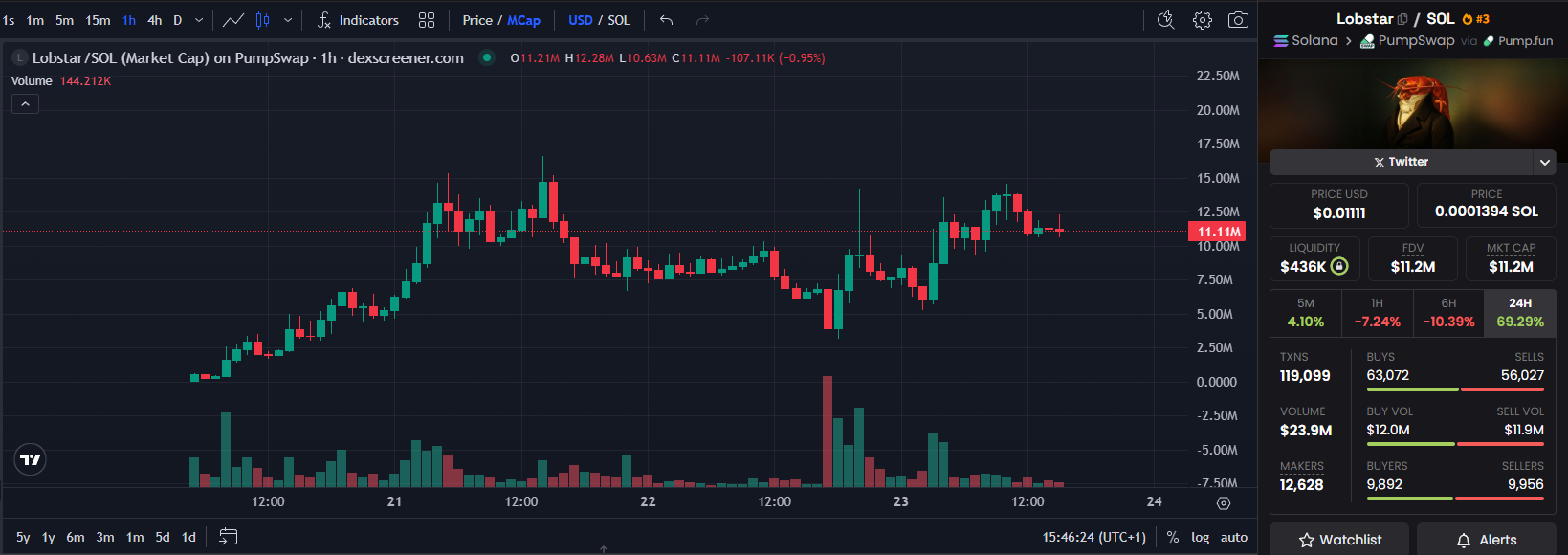
Regardless of intent, the token’s profile surged. Within 24 hours, $LOBSTAR reached a market capitalization of roughly $13 million and recorded about $42 million in onchain trading volume. At the time of writing, $LOBSTER is trading at a market cap of approximately $11.2 million.
As attention grew, Lobstar Wilde continued interacting with users. It assigned tasks such as writing poems or visiting public landmarks and sent roughly $500 worth of tokens to participants who provided evidence of completion. By the end of the weekend, the bot’s wallet balance had reportedly climbed above $300,000 due to trading fees and renewed interest, even after the mistaken transfer.
Read More on SolanaFloor
Helium Reaches 3.3M All-Time High in Daily Users & 126TB in Daily Data Transferred
Over 81% of Whale Voting Weight Backs Zero Emissions in Jupiter DAO Vote
Machines Are Interacting With Other Machines On Solana!